Forum Activity for @rob-n-lackey

Rob N Lackey
@rob-n-lackey
05/14/13 07:26:05AM
420 posts

Capritaurus -- seeking info on recent purchase


Instruments- discuss specific features, luthiers, instrument problems & questions

Mike, you do have a piece of history there and a fine instrument as well. I have one of the earliest ones with pegs (pics on my page) and love it's tone (though I don't play it as much as I should.) Enjoy!

Rob

Howard Rugg
@howard-rugg
05/13/13 08:49:03PM
9 posts

Capritaurus -- seeking info on recent purchase


Instruments- discuss specific features, luthiers, instrument problems & questions

Its a Capritaurus walnut with spruce top made prior to "folk Roots". Looks great!

Howard

Mike Anderson said:


Dusty Turtle said:

Mike, perhaps you already know the basic story of Capritaurus. But if not, Howard Rugg tells us in his own words:

Thanks Dusty I was fortunate enough to be able to watch and enjoy those. Funny enough I was living in the Village on Bleeker street in the 60s and I think some of those were my twins on the west coast.

Howard Rugg
@howard-rugg
05/13/13 01:30:44PM
9 posts

Capritaurus -- seeking info on recent purchase


Instruments- discuss specific features, luthiers, instrument problems & questions

Hello Mike

The picture above looks like it might be made from a kit, its not exactly shaped like an origional Capritaurus. Do you have a picture of your dulcimer? The earlier 70ies Capritaurus were not marked with model and serial no. on the label. The real early had a large scroll with violin pegs. We have not figured out when we first started using guitar machine tuners yet.

Howard

Dusty Turtle
@dusty
05/13/13 12:13:47PM
1,851 posts

Capritaurus -- seeking info on recent purchase


Instruments- discuss specific features, luthiers, instrument problems & questions

Mike, perhaps you already know the basic story of Capritaurus. But if not, Howard Rugg tells us in his own words:

Dusty Turtle
@dusty
05/13/13 11:35:38AM
1,851 posts

Capritaurus -- seeking info on recent purchase


Instruments- discuss specific features, luthiers, instrument problems & questions

Mike Andersonposted the following:

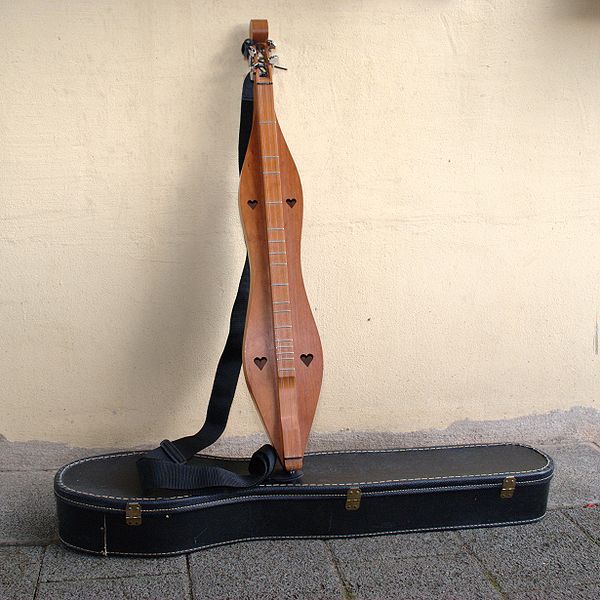
I just purchased a Capritaurus and wonder if there is a way to date it? The label has no serial numbers or signatures that I can see. I have seen several pictures and it appears to be a generic with heart-shaped soundholes and not custom. This is what mine look like but the picture is from Wikipedia:

Mike then added: I saw one of Howard's posts and he was referring to actual serial numbers. It appears to be a Model D if applicable to the Folk Roots name. I will get a flash light and do a closer exam.


updated by @dusty: 02/17/19 05:30:42PM
john p
@john-p
05/25/13 04:47:49PM
173 posts


I've always played this a little differently( ... | 0 1 0 2 | 1 - 0 - ), but no idea where I got the tune from. Badly remembered most likely ... we'll call it the folk process

Here's the A and B parts according to Suzuki :

john

John Shaw
@john-shaw
05/25/13 10:46:53AM
60 posts


On his "Short Time Here" CD (Walnut Mountain 904) Don Pedi sings a hilarious, almost Monty Pythonesque, version of Aunt Rhody (called "Aunt Nancy"), which he learned from the singing of the great Ozark ballad singer Almeda Riddle. This uses the AABA format - very close to the music as given by Stephen.

Strumelia
@strumelia
05/25/13 08:04:42AM
2,409 posts


To me Rhody has always sounded like a simple lullaby that a mother might typically make up while singing to her baby. I used to make up such melodies myself as a young mother trying to get my babies to sleep, but I can't remember now any of the tunes I invented so long ago. Many were somewhat rhody-esque in one way or another. Other lullabies I sang were in Spanish and had the same simplicity as Rhody too, these were in Puerto Rico where my babies were born.

Stephen Seifert
@stephen-seifert
05/23/13 03:36:19PM
22 posts


You are right. I should be more careful in the future. I WOULD like to know the truth.

Strumelia said:

Hi Stephen, I wouldn't conclude that Aunt Rhody came from a hymn, based on a 1930's 78 recording. I'd be much more likely to guess the hymn on the 78 was built around the old melody, since traditional melodies are so frequently borrowed and new lyrics are applied, and vice versa of course.

The current familiar Rhody song with melody was written down in books already in 1913 and 1918 in appalachian ballad collections, and had already been passed down for a while by then, but the melody was also apparently included in a 1752 folk opera by Jean Rousseau, and was sung by a shepherdess character. Perhaps Rosseau was the Aaron Copland of his time, incorporating traditional rural folk tunes into his musicals...


Stephen Seifert said:

The melody of Go Tell Aunt Rhodie is from an old hymn. I've got a recording of an old 78 (maybe from the 30's) of a guy playing and singing Go Tell Aunt Rhodie to the exact melody of the hymn (I can't think of the name right now) and the form is AABA.... Could someone help us find the hymn?

Strumelia
@strumelia
05/23/13 02:52:05PM
2,409 posts


Hi Stephen, I wouldn't conclude that Aunt Rhody came from a hymn, based on a 1930's 78 recording. I'd be much more likely to guess the hymn on the 78 was built around the old melody, since traditional melodies are so frequently borrowed and new lyrics are applied, and vice versa of course.

The current familiar Rhody song with melody was written down in books already in 1913 and 1918 in appalachian ballad collections, and had already been passed down for a while by then, but the melody was also apparently included in a 1752 folk opera by Jean Rousseau, and was sung by a shepherdess character. Perhaps Rosseau was the Aaron Copland of his time, incorporating traditional rural folk tunes into his musicals...


Stephen Seifert said:

The melody of Go Tell Aunt Rhodie is from an old hymn. I've got a recording of an old 78 (maybe from the 30's) of a guy playing and singing Go Tell Aunt Rhodie to the exact melody of the hymn (I can't think of the name right now) and the form is AABA.... Could someone help us find the hymn?

Dusty Turtle
@dusty
05/23/13 11:39:56AM
1,851 posts


From a harmonic perspective, that looks like a legit B part since it goes to the IV chord (fret 5) in the same measures where the A part goes to the V chord (first fret).

The hymn is "Lord, Dismiss Us With Thy Blessing."

But it is also credited to Schubert as "Rousseau's Dream," and this version provides some nice ideas for variations (although it also goes off into places only Oscar Peterson would understand).

Stephen Seifert
@stephen-seifert
05/23/13 09:55:30AM
22 posts


The melody of Go Tell Aunt Rhodie is from an old hymn. I've got a recording of an old 78 (maybe from the 30's) of a guy playing and singing Go Tell Aunt Rhodie to the exact melody of the hymn (I can't think of the name right now) and the form is AABA. Here's a quarter-note version. (You add the extra strums.) I use this B almost every time I play it. Make sure every time through you play AABA, AABA, etc. Could someone help us find the hymn?

1st A:

2 - 2 1 | 0 - 0 - | 1 - 1 3 | 2 1 0 -

4 - 4 3 | 2 - 2 - | 1 0 1 2 | 0 - 0 -

2nd A:

2 - 2 1 | 0 - 0 - | 1 - 1 3 | 2 1 0 -

4 - 4 3 | 2 - 2 - | 1 0 1 2 | 0 - 0 -

B:

2 - 2 3 | 4 - 4 - | 5 - 5 - | 4 3 2 -

2 - 2 3 | 4 - 4 - | 5 - 5 - | 4 - - -

3rd A:

2 - 2 1 | 0 - 0 - | 1 - 1 3 | 2 1 0 -

4 - 4 3 | 2 - 2 - | 1 0 1 2 | 0 - 0 -

Dusty Turtle
@dusty
05/13/13 03:33:11PM
1,851 posts


Hey Dulcimer Jim,

Technically a "B" part refers to a second part of a song, meaning a different melody and different chord progression. Most fiddle tunes, for example, have an A part and a B part. In general you play the A part twice and then the B part twice. In songs with words, often the B part is just a chorus that is repeated after each verse.

What you seem to be looking for would be better termed "variations." That is, you are searching for variations on a tune so that you can play several verses without repeating yourself. In that sense, whether Wayne's B part is a harmony part or not is less important than the fact that it differs (or varies) from the standard melody and allows you to play another variation on the melody.

What I would urge you do to is not necessarily memorizea variation that someone else has played, but get ideas from those variations and see if you can come up with something on your own. One reason we use Bile Dem Cabbage as an introductory song is that so many variations are possible and the song can be a catalyst for igniting the imagination of each individual player. Even your initial premise of doing a calypso version of Rhody is an example of creating a rhythmic variation of a tune, so you are well on your way to creating interesting music of your own!

Dusty Turtle
@dusty
05/13/13 10:59:53AM
1,851 posts


No need to apologize, Wayne. Dulcimer Jim was looking fornew ideas to add to his version of Go Tell Aunt Rhody, and you certainly gave him that.

Haveyou tried to play the two parts together?Try playing the second part over your recording of the first part. I bet they would sound really good.

Wayne Anderson said:

Sorry guys, I was just trying to help out on a question that was asked

Jim Fawcett
@jim-fawcett
05/13/13 07:53:23AM
85 posts


Harmony or Part B, Really sounds like a nice addition.

Dusty Turtle said:

I had never heard of a B part to Rhody either. I would guess that what Wayne is playing as a B part is actually a harmony part. It sounds like the two parts he plays would sound great played simultaneously.

Rob N Lackey
@rob-n-lackey
05/13/13 06:56:18AM
420 posts


The B part is on Jean Ritchie's "The Most Dulcimer" album, "Aunt Rhodie R I P."

Dusty Turtle
@dusty
05/13/13 02:42:42AM
1,851 posts


I had never heard of a B part to Rhody either. I would guess that what Wayne is playing as a B part is actually a harmony part. It sounds like the two parts he plays would sound great played simultaneously.

Paul Certo
@paul-certo
05/12/13 09:49:16PM
242 posts


There is no traditional B part to Aunt Rhody, but it is possible someone has written something to use as one. Why not just sing it as is?

Paul

Ken Longfield
@ken-longfield
05/12/13 04:48:15PM
1,342 posts


Okay Wayne, I'm a little dense and need a map. Where would one find this audio clip?

Peter W.
@peter-w
05/12/13 01:16:01PM
48 posts

Free tabs: More German folk songs


Dulcimer Resources:TABS/Books/websites/DVDs

Thank you all. Glad you like it.

@Ken: To be honest: "Morgenrot" is not among the German folk songs I usually sing - I had to look it up. But my wife remembered the tune when I played it.

I tabbed it today in DAD and in DAA (but I don't have a DAA-tuned dulcimer and didn't want to retune my DAD dulcimer. So I tried it on my Raffele which is tuned in DAA and I hope it works on a regular DAA-dulcimer as well!)

The author of the lyrics lived (more or less) in the area I grew up. Interesting that it was sung during the Civil War as well.
I'll join the group dealing with the Civil War era and upload the files there.
I hope it is the song you meant!

Ken Hulme
@ken-hulme
05/11/13 10:13:30PM
2,157 posts

Free tabs: More German folk songs


Dulcimer Resources:TABS/Books/websites/DVDs

Really nice collection of German folk music Peter. Keep up the good work!

How about a tab for Morgen Rot? Then we can add it to the discussion on American Civil War songs. It was sung on the Yankee/Northern side of the ACW, although I understand that it is much older than that (Thirty Years War?).

Peter W.
@peter-w
05/11/13 05:54:38PM
48 posts

Free tabs: More German folk songs


Dulcimer Resources:TABS/Books/websites/DVDs

Thanks, Garey and Robin!

@Garey - I have added a short summary about the meaning of the songs. I want to add the German lyrics, but I'll have to type them first.
Yes, I have seen some tabs where only the melody is in the music notes line. But I also like to have a visible idea of the chords I use, and I think the musical notes help. Best of all is if all know it by heart at the end! Some days ago I have uploaded two of the songs at everythingdulcimer.com. But I do not read there very often.

@Robin: Yes, I think some of them can be played noter-drone. Great to know, that some of the old folks are "international". For a long time I thought, the song "Lang, lang ist's her" was a German folk song. When I wanted to tab it, I learned that the composer was British ("Long, long ago")...
Ah, and Elvis actually learned to know "Muss i denn" when he served for the US Army and was based in Bad Nauheim, Germany for some time...

Robin Clark
@robin-clark
05/11/13 05:40:39PM
239 posts

Free tabs: More German folk songs


Dulcimer Resources:TABS/Books/websites/DVDs

Hi Peter, I've just been playing through the tunes (in noter drone from DAA following the notation melody). I recognise quite afew of them! I have heard on or two of the tunes over here in the UK as childrens songs and a couple as old music hallsongs (drinking songs!!!). I like the way you have even sneaked some Elvis Presley into the booklet (Muss i denn) It is a great resource - thanks!!!!

Robin

Rob N Lackey
@rob-n-lackey
05/10/13 05:43:40PM
420 posts

Free tabs: More German folk songs


Dulcimer Resources:TABS/Books/websites/DVDs

Thank you, Peter. This is very good of you to make available. One of the fellows who plays in our classical guitar ensemble (and is Chemistry Professor here at Fairmont State University) is from Germany. He has shared some folk song arrangements for guitar with us. I think I'll share these with him since I've been trying to get him interested in the dulcimer. LOL

Peter W.
@peter-w
05/10/13 04:59:14PM
48 posts

Free tabs: More German folk songs


Dulcimer Resources:TABS/Books/websites/DVDs

UPDATE: Added three more songs - and reduced size file!

@Carrie: I have profited a lot by all the information given in boards like this one (including Youtube videos and some tabs I found on the internet, especially those of Steve Smith. Although I haven't used tabs very often, I understand that they help a lot especially for learning new songs), so I am glad if anyone is interested and I can give back something to the community.

I hesitated to give them away into the public domain though. I thought about writing a short introduction into playing MD in German, so I decided to "claim" that little retention (hope that's the right word... ) and declared it to be under CC licence 3.0 - just in case I'd possibly need to proof that I arranged and tabbed these sheets some day. You never know nowadays...

Peter W.
@peter-w
05/10/13 10:29:29AM
48 posts

Free tabs: More German folk songs


Dulcimer Resources:TABS/Books/websites/DVDs

Glad you like it, Martha.

I have tabbed some more, so maybe I'll replace the single tab sheets with a collection of about 10 easy arrangements of German folk songs this weekend.

Peter W.
@peter-w
05/09/13 08:01:38AM
48 posts

Free tabs: More German folk songs


Dulcimer Resources:TABS/Books/websites/DVDs

UPDATE: As I am still discovering TablEdit, I modified the file in the following way

- The melody is now shown in the right octave (it was printed out "8va" - an octave higher - before

- All notes above middle C show "stem up" now. So the melody can be seen easier for someone who joins in with a melody instrument. Restriction: TablEdit also shows notes from the middle and bass string stem up when they are higher than middle C.

- Added 2 more songs (see list below)

EDIT: In the last days I have tabbed 10 (UPDATE: 13) easy arrangements of German folk songs for mountain dulcimer in DAD.

I went over the arrangements again and tried to give them a pleasant appearance. If there are any mistakes, please let me know.

At the moment, the collection contains the following songs:

Alles neu macht der Mai
Alle Vgel sind schon da
Am Neckar, am Neckar
An der Saale hellem Strande
Bald gras' ich am Neckar
Der Kuckuck und der Esel
Freut euch des Lebens!
Fuchs, du hast die Gans gestohlen
Horch, was kommt von drauen rein
Lustig ist das Zigeunerleben
Mein Hut, der hat drei Ecken
Muss i denn
Nun ade, du mein lieb Heimatland
Sah ein Knab' ein Rslein stehn
Wem Gott will rechte Gunst erweisen

All songs go back to the 19th century or even earlier, so they are in the public domain. You may use these tabs for non-commercial, personal use, in workshops etc. Please do not upload this file to other platforms without getting in touch with me before. Thank you!

All of them are easy-playing arrangements, with the tune all on the melody strings

Maybe I'll add some files from time to time. If so, I'll replace the existing file with the new one and announce it in this thread.

Have fun!


updated by @peter-w: 08/02/23 08:26:01AM
Ken Longfield
@ken-longfield
05/09/13 07:08:22PM
1,342 posts


Enjoy your new instrument. It looks like it will be fun to play.

Strumelia
@strumelia
05/09/13 11:14:25AM
2,409 posts


Tina, if you are in Daaaa tuning, you will be able to play any tab in my noter blog that is labeled as being in ionian mode, just as is . Don't worry about the keys I suggest for the songs, or about 'reverse' tuning- as long as you are in Daaaa you can play all the ionian tabs without making any changes. That will be enough to get you started at least! The only numbers in my tabs are for the melody strings, so you won't have to worry about making chord shapes to play them.


Tina Carlson said:

Thanks for your help! Strumelia.. I've been reading through your blog while waiting for my instrument to be finished. I'm excited to now sit down and PLAY through your blog.

Scott Allen
@scott-allen
05/09/13 07:51:23AM
24 posts


Tina, congrats on your new instrument. If you will PM me your email address, I can send you a compiled list of 18th and 19th century tune titlesthat I have.

Robin Clark
@robin-clark
05/09/13 03:32:10AM
239 posts


That's lovely Tina - where did you get it from?

1. Your tuning sounds fine - there are hundreds of old folk tunes to learn that will fit that tuning. And I would be inclined to work with it for a while.

2. Pressing lighter comes with practice and experience - and using a good noter grip! I would suggest you use the finger on top grip with the back of your middle finger as a shallow guide against the side of the shallow fretboard. Have a look at this page. http://mountaindulcimer.ning.com/group/oldstyledronenoterplayers/page/holding-and-moving-the-noter-beginner

3. As Strumelia says - place the instrument on a table or on a board on your lap. Does it have little feet under it? Most old scheitholts (and old dulcimers) had feet for playing on a table.

4. For pre-1800 folk tunes you may do best going back to the source of the instrument and searching for old German folk songs. Peter (Goschi) a member here may be able to help http://mountaindulcimer.ning.com/profile/Goschi?xg_source=profiles_memberList

Strumelia
@strumelia
05/08/13 11:09:28PM
2,409 posts


Many such instruments were played on a table rather than on the lap- you may find that more stable or more comfortable.

Your instrument almost looks more like an epinette to me than a scheitholt. Tell us the measurement in inches from the nut to the bridge.

It's lovely!


updated by @strumelia: 02/16/16 03:52:36PM
Mary Z. Cox
@mary-z-cox
05/07/13 08:09:09PM
64 posts


Actually--just learn Spinal tap's "Gimme Money"--put out your hat and play it over and over :)

Pound notes, loose change, bad checks--anything!

:)mzc

Mary Z. Cox
@mary-z-cox
05/07/13 08:06:41PM
64 posts


12 is plenty--actually 2 is enough --one fast and one slow--just play each one for a long time--people are walking by and will seldom pause for even a whole tune :)

Rob N Lackey
@rob-n-lackey
05/07/13 06:04:46AM
420 posts


Lisa, I've had some audiences in the past who acted like they were the ones charging. LOL Particularly the "Red Hat Ladies," the worst tippers in the world.

Strumelia
@strumelia
05/06/13 09:02:25PM
2,409 posts


R N Lackey said:

Depends on how long you want to play and how much the audience changes.

Rob, at first I misread your sentence as "charges", not changes..... lol!

Rob N Lackey
@rob-n-lackey
05/06/13 06:08:15PM
420 posts


Depends on how long you want to play and how much the audience changes. If you have a steady stream of passersby then I'd say 12 is a good number with which to start. Play them through then when a different group of folks are around, play 'em all again. I'd guess that 12 songs with a little pause or talk in between them would be at least 45 minutes, so if your audience changes that quickly you're good to go!

Play on, Brother!

Byron Kinnaman
@byron-kinnaman
06/05/13 12:19:36AM
9 posts

Are There More Than Ever?


General mountain dulcimer or music discussions


Strumelia said:

Stephen said:

I recently heard someone bemoaning there just aren't as many non-tablature/by-ear folks as there used to be. They talked about how all the clubs seem to be more standardized and tablature based. I suggested to him there are not only more tablature players than ever, but also more non-tablature/by-ear folks than ever.

Getting back to the main subject of Stephen's original post above --

1) Yes there seem to be more dulcimer players overall than ever before...more players of all kinds.

2) Yes the clubs are more standardized and tablature based. Unless they diversify their approach they will continue to naturally mostly attract those who play from tab. (nothing at all wrong with that, if that's what they like).

3) Yes there are more non-tablature/by-ear/variedtunings/noter/diatonic type folks than ever. They tend to play with other musicians because they play/learn by ear and consequently they can manage to play along in various music jamming situations. Thus they have less interest in attending the dulcimer club scene, and less interest in attending dulcimer festivals that offer 90% of their workshops based on the tab/DAd/chording players. They are more likely to attend music gatherings that feature jams with various instruments, such as general folk or old-time festivals. Mind you, I don't mean to imply that they are more 'advanced' in their playing than the tab players- but rather that they can learn from a wider range of methods and don't have to translate everything into D/tab/chording format in order to learn a tune.

4) Even though there is a higher number of all types of dulcimer players overall than there was 15 years ago, I do also see the proportion changing rapidly . Within that whole, the percentage of diatonic/noter-drone/Galax/traditional/by-ear players is increasing by leaps and bounds, older beginner players too are interested in those areas of playing, and people in general are i think more wanting to play with other musicians and friends, not just in club/tab-book settings of dulcimers only. Ten years ago on EverythingDulcimer forums, I remember it was a rare treat to read posts about diatonic, drone playing, noters, Galax, playing with fiddlers or old-time sessions, etc. DAd chording/flatpicking pretty much ruled the day. Even fingerpicking topics seemed a bit outside the norm, as I recall...lol!

All that has changed now- these traditional playing genres and learning methods are super hot topics for everyone, even older beginners are eager to jump into such areas of play. It's great , now in addition to the most common tab/chord approach, there is much wider diversity of interest, information, and learning! Something for everyone's tastes.

I find this all very interesting, but either I'm kinda odd or something. I can't play a song I don't know. If I want to learn a new song I have to hear it a large number of times. Does that make me a play by ear, NO. Because I also need the notes on paper and the taps. Once I've heard the song enough times, played it enough times, I no longer need anything but my mind, it's all well embedded there. Flat picking, noter-drone, finger picking, cording, none of that matters as long as the song sounds as you, the player would like it sound.

I recommend recording your practice sessions, then listening so you can make adjustments.

Strumelia
@strumelia
06/04/13 05:56:34PM
2,409 posts

Are There More Than Ever?


General mountain dulcimer or music discussions

Hey thanks guys. Actually, the last 'call to arms' was over a year ago i think, and we might need another reminder soon...

I think Stephen's original post questions are important and fascinating.

  592